Research

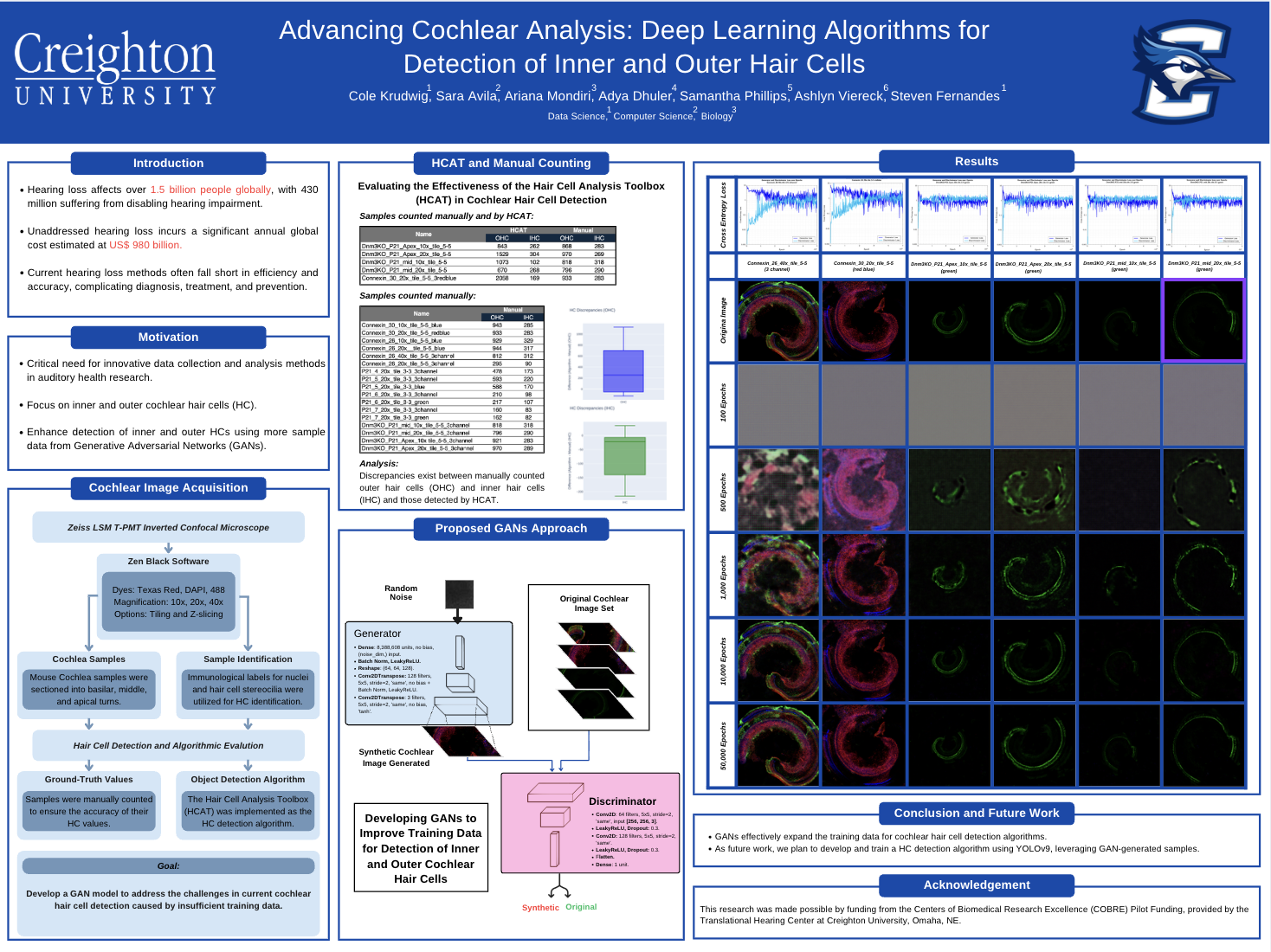
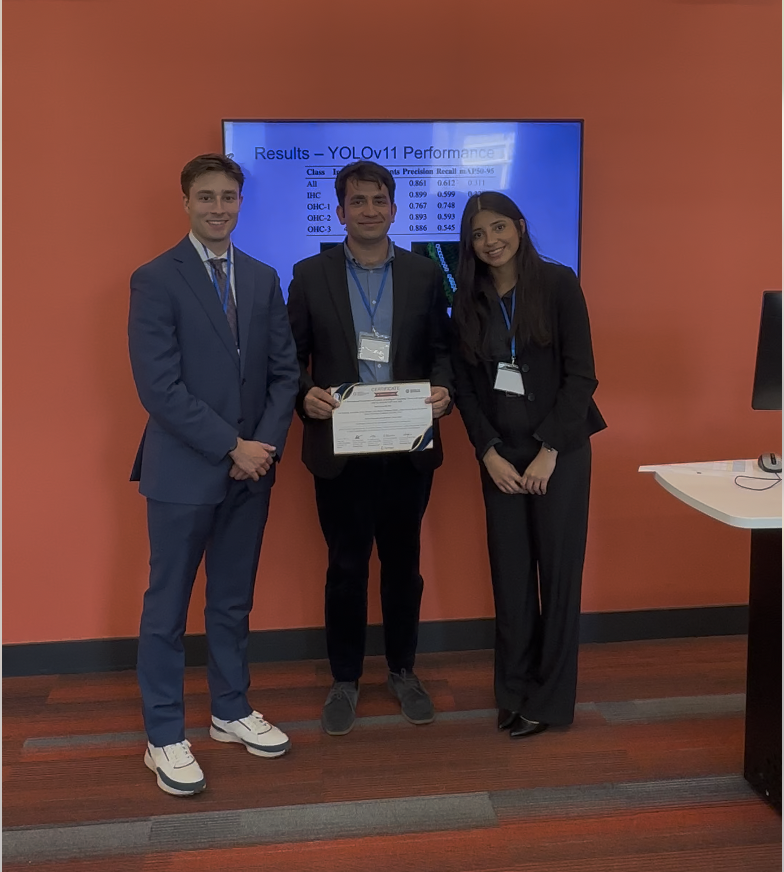
Fine-Tuning YOLO26 for Outer and Inner Cochlear Hair Cell Detection

  • Building on our earlier cochlear hair cell detection work, this research evaluates whether newer YOLO architectures can improve the accuracy and efficiency of automated hair cell quantification in densely packed confocal microscopy images.
  • Contributed to preparing and validating the annotated cochlear dataset, fine-tuning multiple YOLO architectures, and comparing model performance to evaluate which architecture was best suited for automated hair cell detection.

Advanced Deep Learning for Automated Cochlear Hair Cell Detection

  • Cochlear hair cell quantification traditionally relies on researchers manually counting cells in microscopy images, a time-intensive process that limits the scale of hearing loss research. This project investigates deep learning approaches for automatically detecting and classifying inner and outer cochlear hair cells.
  • Collected and manually annotated high-resolution confocal microscopy images, trained YOLO-based object detection models, and aided in developing a generative adversarial network (GAN) to generate synthetic cochlear images for data augmentation and future model training.

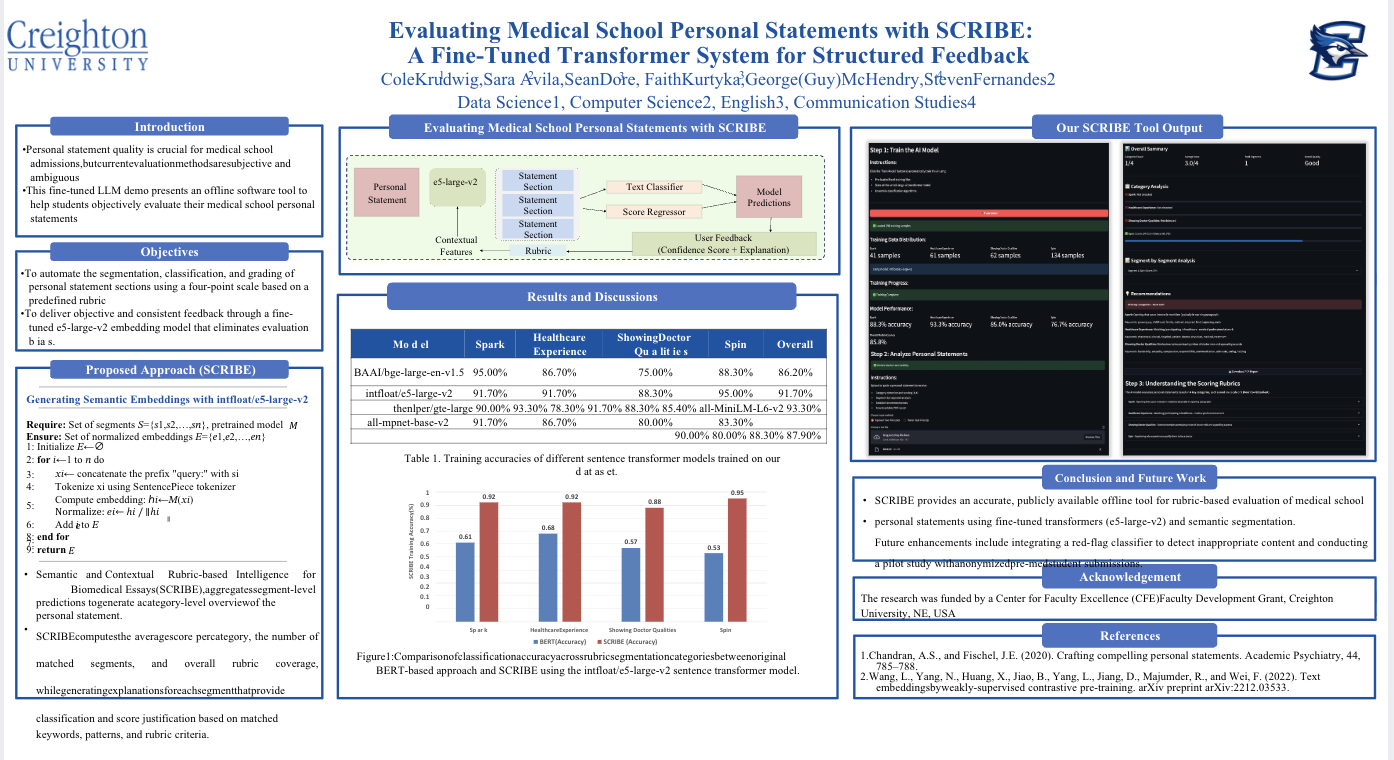
SCRIBE: Transformer-Based Evaluation of Medical School Personal Statements

  • Medical school personal statements are often evaluated subjectively, creating inconsistent feedback for applicants. This project develops an offline NLP system that segments essays, classifies rubric-aligned content, and generates structured feedback.
  • Organized and annotated training essays, evaluated transformer embedding models, and refined semantic segmentation and rubric-based classification to improve automated feedback aligned with medical school admissions criteria.

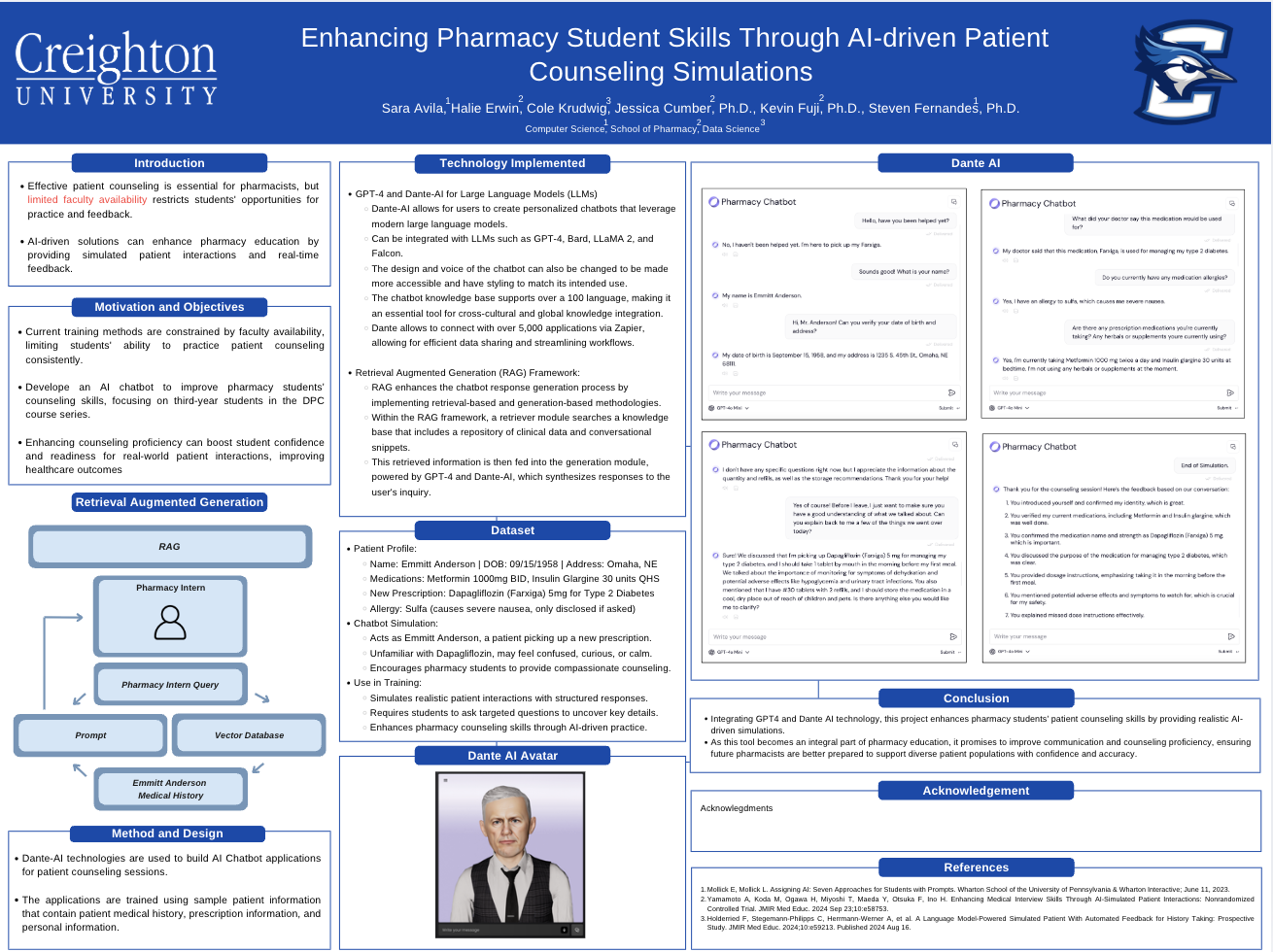
Enhancing Pharmacy Skills Through AI-Driven Patient Counseling Simulations

  • Limited faculty availability restricts pharmacy students' opportunities to practice patient counseling with consistent feedback.
  • Fine-tuned and evaluated LLM options to generate realistic, rubric-aligned patient responses, and designed the simulated patient's profile to support standardized counseling practice.